
SEO Meta Title
The Importance of Digital Marketing for Business Growth in 2026 | Complete Guide
Meta Description
Discover why digital marketing is essential for business growth in 2026. Learn how SEO, SEM, social media marketing, content marketing, website development, and web design help businesses increase visibility, generate leads, and achieve long-term success.
URL Slug
importance-of-digital-marketing-for-business-growth-in-2026
Focus Keyword
Digital Marketing
Secondary Keywords
SEO, SEM, Social Media Marketing, Content Marketing, Website Development, Web Design, Google Ranking, Lead Generation, Online Marketing, Digital Strategy
The Importance of Digital Marketing for Business Growth in 2026
The Importance of Digital Marketing for Business Growth in 2026
Why Digital Marketing Matters More Than Ever in 2026
Consumer behavior has changed dramatically over the last decade. Before making a purchase, most people search online, read reviews, compare alternatives, and engage with brands through multiple digital channels. This shift has made digital marketing one of the most powerful tools for businesses seeking to attract, convert, and retain customers.
Traditional marketing methods still have their place, but they often lack the targeting, flexibility, and measurable results that digital marketing provides. Modern businesses need strategies that enable them to reach the right audience at the right time with relevant and personalized content.
Some of the biggest reasons digital marketing is essential in 2026 include:
- Increased online consumer behavior.
- Better customer targeting through data analytics.
- Cost-effective marketing for businesses of all sizes.
- Higher brand visibility across multiple platforms.
- Real-time performance tracking and optimization.
- Improved customer engagement and relationship building.
- Scalable strategies that grow with the business.
Rather than guessing what works, businesses can use analytics and customer insights to make informed decisions, optimize campaigns, and continuously improve results.
The Foundation of Every Successful Digital Strategy: A Professional Website
A business website serves as the digital headquarters of a brand. It is often the first impression potential customers have, making website quality a critical factor in business success.
An effective website should not only look visually appealing but also provide an excellent user experience. Visitors expect fast loading speeds, mobile responsiveness, intuitive navigation, and valuable information that helps them make informed decisions.
Professional website development focuses on creating a technically sound foundation, while web design ensures that the website is attractive, user-friendly, and aligned with the brand identity.
Key elements of a successful business website include:
- Responsive design for all devices.
- Fast page loading speed.
- Secure HTTPS connection.
- Clear navigation.
- Search engine optimization.
- Strong calls-to-action.
- High-quality content.
- Contact forms and lead capture opportunities.
- Easy accessibility and usability.
During my work on website development and web design projects, I have learned that even minor improvements in page speed, mobile optimization, and user experience can significantly increase visitor engagement and conversion rates.
A professional website is no longer just an online brochure—it is the foundation of every successful digital marketing strategy.
Search Engine Optimization (SEO): Building Long-Term Online Visibility
Search Engine Optimization remains one of the most valuable digital marketing investments for businesses in 2026.
SEO focuses on improving a website’s visibility in search engine results, helping businesses attract qualified organic traffic without relying entirely on paid advertising.
When customers search for products or services, they naturally trust websites appearing on the first page of search results. Achieving those rankings requires a combination of technical optimization, valuable content, keyword research, and an excellent user experience.
Effective SEO includes:
- Comprehensive keyword research.
- On-page optimization.
- Technical SEO improvements.
- High-quality content creation.
- Internal linking.
- Mobile optimization.
- Website speed optimization.
- Local SEO strategies.
- Authority-building through quality backlinks.
One lesson I’ve consistently observed through SEO-focused projects is that rankings are not achieved overnight. Businesses that publish valuable content consistently, optimize their websites regularly, and focus on solving customer problems tend to achieve sustainable improvements in visibility and organic traffic over time.
SEO is not simply about ranking higher—it’s about connecting businesses with people actively searching for their solutions.
Search Engine Marketing (SEM): Accelerating Business Growth with Paid Advertising
While Search Engine Optimization (SEO) builds long-term organic visibility, Search Engine Marketing (SEM) provides businesses with the opportunity to achieve immediate visibility through paid advertising. In 2026, an effective digital marketing strategy often combines both SEO and SEM to maximize reach, traffic, and conversions.
SEM primarily involves running paid campaigns on search engines such as Google, where businesses bid on relevant keywords to display their advertisements at the top of search results. This strategy is particularly beneficial for new businesses, product launches, seasonal campaigns, and highly competitive industries.
One of the greatest advantages of SEM is precise audience targeting. Businesses can reach potential customers based on keywords, location, demographics, interests, devices, and even previous online behavior. Unlike traditional advertising, every click, impression, and conversion can be measured, allowing marketers to optimize campaigns continuously.
A successful SEM strategy includes:
- Comprehensive keyword research
- Well-structured advertising campaigns
- Compelling ad copy
- Optimized landing pages
- Conversion tracking
- Bid management
- Performance analysis
- Continuous campaign optimization
From my experience working on digital marketing projects, I have learned that paid advertising delivers the best results when it complements strong SEO and high-quality landing pages. Driving traffic to a poorly optimized website rarely produces meaningful business results. Instead, combining paid campaigns with an excellent user experience significantly improves conversion rates and return on investment.
Social Media Marketing: Building Relationships Beyond Sales
Social media has transformed the way businesses communicate with their audiences. Platforms such as Facebook, Instagram, LinkedIn, YouTube, and X have become powerful channels for building brand awareness, engaging customers, and generating business opportunities.
However, successful Social Media Marketing (SMM) is not simply about posting regularly. It involves understanding audience behavior, creating valuable content, encouraging conversations, and building long-term trust.
I believe that social media should be used to create meaningful relationships rather than simply promoting products. Businesses that educate, inspire, entertain, and genuinely help their audience often achieve stronger engagement and greater brand loyalty.
An effective social media strategy typically includes:
- Consistent content publishing
- Educational and informative posts
- High-quality visual content
- Short-form and long-form videos
- Audience engagement
- Community building
- Performance analysis
- Continuous content optimization
Throughout my learning and project experience, I have seen how consistent posting, audience-focused content, and strategic planning can gradually improve engagement, increase followers, and strengthen brand credibility.
The businesses that succeed on social media are those that focus on providing value before expecting sales.
Content Marketing: The Heart of Digital Success
Content marketing remains one of the most powerful pillars of digital marketing in 2026. Every blog article, video, infographic, email, social media post, and website page contributes to the overall customer journey.
High-quality content helps businesses:
- Answer customer questions
- Solve real problems
- Build authority
- Improve SEO rankings
- Increase website traffic
- Generate qualified leads
- Strengthen customer trust
Rather than creating content solely for search engines, businesses should prioritize creating content that genuinely benefits readers. Search engines increasingly reward helpful, original, and experience-based content that demonstrates expertise and trustworthiness.
From working on content creation and SEO projects, I have observed that consistency plays a more important role than volume. Publishing valuable content regularly often produces better long-term results than publishing large amounts of low-quality material.
Effective content marketing includes:
- Educational blog articles
- Case studies
- How-to guides
- Industry insights
- Videos
- Infographics
- Email newsletters
- Social media content
- Customer success stories
When combined with SEO best practices, content marketing becomes one of the strongest drivers of sustainable organic growth.
Website Development and Web Design: Enhancing User Experience
A business can attract thousands of visitors, but without a well-designed and functional website, those visitors may leave without taking action.
Website development focuses on building a technically reliable website, while web design ensures the experience is visually appealing, intuitive, and user-friendly. Together, they create a seamless journey that encourages visitors to explore, engage, and convert.
Essential characteristics of a high-performing website include:
- Mobile responsiveness
- Fast loading speed
- Simple navigation
- Accessible design
- Clear messaging
- Attractive layouts
- Optimized images
- Secure browsing
- Strong calls-to-action
During my work with website development and web design projects, I noticed that improving navigation, simplifying page layouts, and optimizing mobile performance often led to better engagement and lower bounce rates.
A website should not simply look attractive—it should guide visitors naturally toward taking meaningful actions, such as making a purchase, submitting an inquiry, or contacting the business.
Lead Generation: Turning Visitors into Customers
Generating website traffic is only one part of digital marketing. The ultimate objective is converting visitors into loyal customers.
Lead generation involves attracting potential customers and encouraging them to share their contact information or express interest in a product or service. Successful lead generation requires a combination of SEO, SEM, content marketing, social media, email marketing, and optimized landing pages.
Common lead generation strategies include:
- Downloadable resources
- Free consultations
- Contact forms
- Newsletter subscriptions
- Webinars
- Case studies
- Product demonstrations
- Free trials
- Valuable educational content
One important lesson I have learned is that trust plays a critical role in lead generation. Businesses that consistently provide helpful information and prioritize customer needs often generate higher-quality leads than those relying on aggressive sales tactics.
Digital marketing is most effective when every stage of the customer journey—from awareness to conversion—is carefully planned and continuously optimized.
Data-Driven Marketing: Making Smarter Business Decisions
One of the greatest advantages of digital marketing is the ability to measure almost every aspect of a campaign. Unlike traditional marketing, where results are often difficult to track, digital marketing provides businesses with real-time insights into customer behavior, campaign performance, and return on investment (ROI).
Data-driven marketing allows businesses to understand what works, identify areas for improvement, and make informed decisions based on actual performance rather than assumptions.
Some of the most important metrics include:
- Website traffic
- Organic search performance
- Keyword rankings
- Click-through rate (CTR)
- Conversion rate
- Bounce rate
- Customer acquisition cost (CAC)
- Return on Ad Spend (ROAS)
- Engagement rate
- Lead generation performance
Monitoring these metrics regularly helps businesses optimize campaigns, improve user experience, and allocate marketing budgets more effectively.
From my experience working on SEO, content marketing, and social media projects, I have realized that successful digital marketing is not about launching a campaign and hoping for the best. Instead, it requires continuous monitoring, testing, learning, and improvement. Small adjustments based on performance data can often produce significant long-term results.
The Role of Artificial Intelligence in Digital Marketing
Artificial Intelligence (AI) has become an integral part of modern digital marketing. In 2026, businesses use AI to streamline repetitive tasks, analyze customer behavior, personalize user experiences, and improve campaign efficiency.
However, while AI enhances productivity, it cannot replace human creativity, strategic thinking, or genuine customer understanding.
AI supports digital marketers by helping them:
- Analyze large volumes of marketing data
- Generate content ideas
- Automate email marketing campaigns
- Personalize customer experiences
- Improve audience segmentation
- Predict customer behavior
- Optimize advertising campaigns
- Enhance customer support through chatbots
Despite these advancements, businesses should avoid relying entirely on automation. Authentic storytelling, empathy, and creativity remain essential for building trust and lasting customer relationships.
I believe the most effective digital marketing strategy combines the efficiency of AI with the originality and experience of human marketers. Businesses that strike this balance will be better positioned to adapt to changing market trends while maintaining a genuine connection with their audience.
Common Digital Marketing Mistakes Businesses Should Avoid
Many businesses invest in digital marketing but fail to achieve their desired results because they overlook fundamental best practices. Recognizing these common mistakes can save time, resources, and missed opportunities.
1. Ignoring SEO
A visually appealing website is ineffective if potential customers cannot find it through search engines. SEO should be integrated into every stage of website development and content creation.
2. Publishing Inconsistent Content
Irregular posting can reduce audience engagement and limit long-term growth. A consistent content calendar helps maintain visibility and build trust over time.
3. Prioritizing Sales Over Value
Businesses that focus solely on selling often struggle to build meaningful relationships. Providing educational and helpful content encourages trust, which naturally leads to conversions.
4. Neglecting Mobile Optimization
With the majority of users browsing on smartphones, websites must deliver a seamless mobile experience. Responsive design and fast loading speeds are essential.
5. Ignoring Analytics
Without analyzing campaign performance, businesses cannot identify what is working or where improvements are needed. Data should guide every marketing decision.
6. Failing to Understand the Target Audience
Effective marketing begins with understanding customer needs, challenges, and preferences. Businesses that create audience-focused strategies achieve stronger engagement and better results.
Practical Strategies for Sustainable Digital Marketing Success
Practical Strategies for Sustainable Digital Marketing SuccessThe Future of Digital Marketing
The digital marketing landscape continues to evolve rapidly. Businesses that embrace innovation while remaining customer-focused will have a significant competitive advantage in the years ahead.
Several trends are shaping the future of digital marketing:
- Increased use of Artificial Intelligence
- Voice search optimization
- Personalized customer experiences
- Video-first content strategies
- Short-form video marketing
- Interactive and immersive content
- Privacy-focused marketing practices
- First-party data collection
- Enhanced local SEO
- Greater emphasis on EEAT (Experience, Expertise, Authoritativeness, and Trustworthiness)
Although technology continues to evolve, the core principles of successful marketing remain unchanged: understand your audience, provide value, build trust, and continuously improve your strategy.
Businesses that focus on solving real customer problems rather than simply promoting products will continue to thrive in the digital age.
Conclusion
Digital marketing has evolved from being an optional marketing channel into a fundamental business strategy. In 2026, customers expect businesses to have a professional online presence, provide valuable content, and engage with them across multiple digital platforms. Organizations that fail to adapt risk losing visibility, credibility, and valuable growth opportunities.
From my perspective, digital marketing is not simply about promoting products or increasing website traffic. It is about understanding people, solving their problems, and building meaningful relationships that foster long-term trust. The most successful businesses combine creativity with data-driven decision-making to create strategies that deliver measurable and sustainable results.
Through my learning journey and hands-on experience with SEO, SEM, Social Media Marketing, Content Marketing, Website Development, Web Design, and Content Creation, I have consistently seen how small, strategic improvements can create significant long-term impact. Publishing valuable content, optimizing websites for search engines, improving user experience, and analyzing campaign performance all contribute to stronger online visibility and better customer engagement.
One of the most important lessons I have learned is that digital marketing success does not happen overnight. It requires patience, consistency, continuous learning, and a genuine commitment to understanding customer needs. Businesses that focus on delivering value rather than chasing short-term results are more likely to build lasting relationships and achieve sustainable growth.
As digital technologies continue to evolve, businesses that embrace innovation while keeping customers at the center of every strategy will remain competitive. Whether you are a startup, freelancer, entrepreneur, or established business owner, investing in digital marketing today is an investment in your future growth.
The digital world will continue to change, but one principle will always remain the same: businesses that educate, engage, and create value will earn the trust of their audience—and trust is the foundation of long-term success.
Key Takeaways
A business website serves as the digital headquarters of a brand. It is often the first impression potential customers have, making website quality a critical factor in business success.
An effective website should not only look visually appealing but also provide an excellent user experience. Visitors expect fast loading speeds, mobile responsiveness, intuitive navigation, and valuable information that helps them make informed decisions.
Professional website development focuses on creating a technically sound foundation, while web design ensures that the website is attractive, user-friendly, and aligned with the brand identity.
Key elements of a successful business website include:
- Responsive design for all devices.
- Fast page loading speed.
- Secure HTTPS connection.
- Clear navigation.
- Search engine optimization.
- Strong calls-to-action.
- High-quality content.
- Contact forms and lead capture opportunities.
- Easy accessibility and usability.
During my work on website development and web design projects, I have learned that even minor improvements in page speed, mobile optimization, and user experience can significantly increase visitor engagement and conversion rates.
A professional website is no longer just an online brochure—it is the foundation of every successful digital marketing strategy.
Frequently Asked Questions (FAQ)
1. Why is digital marketing important for businesses in 2026?
Digital marketing enables businesses to increase online visibility, connect with their target audience, generate qualified leads, improve customer engagement, and achieve sustainable growth through measurable and cost-effective strategies.
2. What are the main components of digital marketing?
The core components include Search Engine Optimization (SEO), Search Engine Marketing (SEM), Social Media Marketing (SMM), Content Marketing, Email Marketing, Website Development, Web Design, Analytics, and Digital Strategy.
3. Is SEO still important in 2026?
Yes. SEO remains one of the most effective long-term strategies for increasing organic website traffic, improving search engine rankings, and attracting customers who are actively searching for products or services.
4. How does content marketing support business growth?
High-quality content educates potential customers, answers their questions, builds trust, improves search engine rankings, increases website traffic, and supports lead generation.
5. Can small businesses benefit from digital marketing?
Absolutely. Digital marketing allows small businesses to compete with larger organizations by targeting specific audiences, optimizing budgets, and building strong customer relationships through valuable online content.
Call to Action
Ready to grow your business with a results-driven digital marketing strategy?
Whether you need support with SEO, SEM, Social Media Marketing, Content Marketing, Website Development, or Web Design, investing in the right strategy today can help you build a stronger online presence, attract qualified customers, and achieve sustainable business growth.
Start by evaluating your current digital presence, identifying areas for improvement, and implementing strategies that prioritize customer value, consistency, and measurable results. Every successful digital journey begins with a single step—and the best time to start is now.
Suggested Internal Links
- Beginner’s Guide to SEO
- What is Search Engine Marketing (SEM)?
- Social Media Marketing Strategies for Small Businesses
- How to Build an SEO-Friendly Website
- Web Design Best Practices
- Content Marketing Strategy Guide
- On-Page SEO Checklist
- Local SEO for Small Businesses
Hero Image
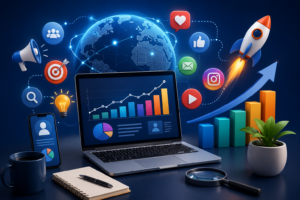
- Alt Text: “Digital marketing strategy for business growth in 2026”
SEO Illustration
- Alt Text: “SEO optimization process improving Google rankings”
Social Media Marketing
- Alt Text: “Social media marketing strategy for business engagement”
Website Development
- Alt Text: “Modern responsive website development and web design”
Analytics Dashboard
- Alt Text: “Digital marketing analytics dashboard showing website performance”
Recommended WordPress Category
Digital Marketing
Suggested Tags
Digital Marketing, SEO, SEM, Social Media Marketing, Content Marketing, Online Marketing, Website Development, Web Design, Google Ranking, Lead Generation, Digital Strategy, Small Business Marketing, Marketing Trends 2026, Business Growth, Search Engine Optimization
Recommended Schema Markup
- Article Schema
- FAQ Schema
- Breadcrumb Schema
- Organization Schema
- Person Schema (Author)
- WebPage Schema
Implementing these structured data types can improve search engine understanding of your content and increase eligibility for rich search results.
Final SEO Checklist
- Primary keyword included in the title, introduction, headings, conclusion, and naturally throughout the article.
- Secondary keywords integrated where relevant without keyword stuffing.
- Clear heading hierarchy (H1, H2, H3).
- Meta title and description optimized.
- SEO-friendly URL slug.
- Internal linking opportunities identified.
- FAQ section included for enhanced search visibility.
- EEAT principles demonstrated through practical insights and experience.
- Mobile-friendly formatting with short paragraphs and scannable sections.
- WordPress-ready structure for easy publishing.
By consistently publishing valuable, user-focused content like this, you’ll strengthen your authority, improve organic visibility, and build lasting trust with your audience.